
Key takeaways
- There is no officially recognized mini, teacup, or toy Pembroke Welsh Corgi; the AKC breed standard describes one size and penalizes diminutive toylike individuals.
- A healthy Pembroke Welsh Corgi stands 10 to 12 inches tall, with males up to 30 pounds and females up to 28 pounds.
- Deliberately breeding for extreme small size raises the risk of serious health problems, from fragile bones to low blood sugar.
- A genuinely smaller-than-average corgi can happen naturally, but a ‘teacup’ label is a marketing signal to slow down and ask questions.
- Buy from a breeder who health-tests parents, shows you the puppy’s home environment, and offers ongoing support.
If you are searching for mini corgi puppies for sale, here is the honest answer up front: there is no separate “mini” corgi breed, and no kennel club recognizes a teacup or toy version. What you are really shopping for is a Pembroke Welsh Corgi that happens to be on the smaller side, and knowing that changes how you should read every listing you come across.
We hear this question all the time from families who fall in love with the corgi look but worry a standard corgi might be too big for an apartment or too much to handle. The good news is that corgis are already a small breed. The trickier part is telling an honest listing from a marketing gimmick. This guide walks through what “mini” actually means, the health issues tied to breeding tiny dogs, the real size you should expect, and how to choose a healthy puppy with confidence.
What “Mini” Corgi Actually Means
When you see a “mini corgi,” “teacup corgi,” or “toy corgi” advertised, none of those are recognized types. The Pembroke Welsh Corgi is a single breed with a single size standard. There is no smaller sub-breed sitting alongside it.
So where do the smaller dogs come ? A few different places, and they are not all equal:
- Natural variation. Just like people, puppies in a litter vary. Some corgis are simply smaller than their littermates and grow into healthy, slightly compact adults. This is normal and nothing to worry about.
- The runt of the litter. The smallest puppy can be perfectly healthy, but “runt” is not a selling feature and should not command a premium.
- Selective breeding for small size. This is where the word “mini” gets risky. Some breeders intentionally pair the smallest dogs, generation after generation, to shrink the line. That practice is where health problems tend to creep .
- Mixed breeding. Occasionally a “mini corgi” is a corgi crossed with a smaller breed. That can be a lovely dog, but it is a mix, not a purebred Pembroke Welsh Corgi, and it should be described honestly.
The takeaway is simple. A smaller corgi can be completely fine when it happens naturally. The word “mini” on a price tag is your cue to ask how that small size came about.
Health Considerations With Undersized Breeding
This is the part we most want first-time buyers to understand, because it is where good intentions can go wrong. Deliberately breeding dogs to be as tiny as possible tends to concentrate problems rather than cute traits.
Corgis already carry some breed-specific health considerations. They are a chondrodystrophic breed, meaning their signature short legs come from a genetic trait that also raises their risk of intervertebral disc disease (IVDD), a painful spinal condition. According to Cornell University’s College of Veterinary Medicine, the same genetic change behind those short legs predisposes affected breeds to disc disease, and it is often first recognized in young adult dogs. Corgis are also monitored for hip dysplasia and eye conditions. Responsible breeders screen for these issues instead of ignoring them.
When a breeder chases extreme small size on top of that, the risks stack up. Veterinary sources describe a familiar set of problems in dogs bred to be unnaturally tiny, including:
- Dangerously low blood sugar (hypoglycemia), especially in very young puppies
- Fragile bones that fracture easily
- Heart and respiratory conditions
- Liver shunts and other organ issues
- Complications with anesthesia and routine surgery
None of that means a smaller corgi is doomed. It means that when small size is the goal instead of health, buyers can end up with a puppy that needs far more veterinary care than expected. If a listing leads with tininess and says nothing about health testing, treat that as a warning sign.
Standard Pembroke Size Expectations
Knowing the real numbers protects you from inflated “mini” claims. Here is what a healthy adult Pembroke Welsh Corgi looks like according to the official AKC breed standard:
- Height: 10 to 12 inches from the ground to the highest point of the withers
- Weight, males: not exceeding 30 pounds, with show-condition dogs around 27 pounds
- Weight, females: not exceeding 28 pounds, with show-condition dogs around 25 pounds
The standard is also blunt about extremes. It states that “diminutive toylike individuals must be very severely penalized.” In plain terms, the people who wrote the breed standard specifically pushed back against corgis bred to be unnaturally small.
So a corgi is already a compact dog. If a puppy is on track to mature around 10 or 11 inches and a bit under the weight range, that is still a normal corgi, not a special “mini” category. A truly tiny adult, well under the standard, is unusual and worth a careful conversation with the breeder about how and why.
Avoiding Misleading “Teacup” Claims
“Teacup” is the label that worries us most. It sounds adorable, and that is exactly why it sells. Once you know a few patterns, misleading listings get easy to spot.
Here are the red flags we tell buyers to watch for:
- Size as the headline. If “teacup,” “tiny,” or “pocket” is the main selling point and health is an afterthought, be cautious.
- No health testing on the parents. Reputable breeders can tell you about the parents’ hips, eyes, and general health. Vague answers are a bad sign.
- Premium pricing for “rare” size. Charging more because a dog is unusually small often rewards exactly the breeding practices that create health problems.
- No home or parents to see. If you cannot see where the puppy was raised or meet at least the mother, slow down.
- Pressure to buy fast. Urgency (“last one,” “someone else is interested”) is a sales tactic, not a sign of a healthy puppy.
A trustworthy breeder will happily explain that “mini” and “teacup” are marketing terms, not breeds. At Roswellcorgipuppies, we describe our puppies honestly: they are Pembroke Welsh Corgis raised in our home, vet-checked, vaccinated, and dewormed before going home around eight weeks. If one puppy is a little smaller than its littermates, we will tell you that plainly, and we will not dress it up as a rare category. 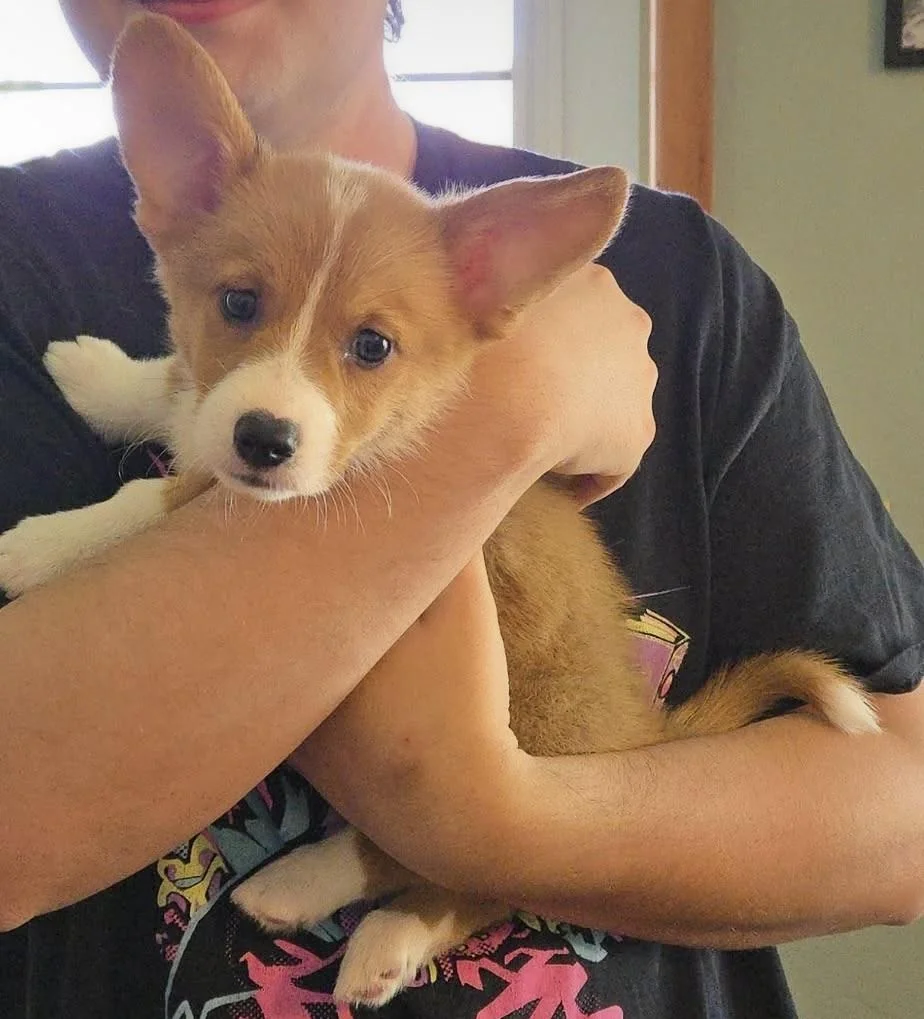
Choosing a Healthy Corgi From a Reputable Breeder
Once you set the “mini” myth aside, choosing a puppy gets much simpler. You are looking for a well-raised, healthy Pembroke Welsh Corgi from someone who cares where that puppy ends up. Here is a quick checklist to guide you:
- Ask about health. Request records of vet checks, vaccinations, and deworming, plus any health information on the parents.
- See the environment. A home-raised puppy that has been socialized around normal household life tends to adjust more easily. Ask to see photos or video of where the litter was raised.
- Meet the parents if you can. Seeing at least the mother gives you a realistic sense of adult size and temperament.
- Expect honest size answers. A good breeder gives you a realistic range, not a promise of a magically tiny dog.
- Look for ongoing support. The best breeders stay reachable after you take your puppy home, for training and care questions.
If you want a deeper walkthrough on vetting a breeder before you commit, our guide on what to look for before you buy from a Welsh Corgi breeder covers the questions to ask and the answers that should reassure you.
Corgis are wonderful companions: smart, affectionate, and surprisingly adaptable to apartments, family homes, and active households alike. They tend to be long-lived for a purebred dog, so you are choosing a friend for many years, and that makes choosing well worth the effort.
The best next step is to skip the “mini” listings entirely and talk to a breeder who will answer your questions straight. If you are ready to start that conversation, reach out to us at Roswellcorgipuppies, tell us about your home, and we will help you find a healthy, well-socialized corgi that fits your life. We are here for support long after your puppy comes home.
Frequently asked questions
Is a mini corgi a real breed?
No. The only recognized variety is the Pembroke Welsh Corgi, which has one size standard. ‘Mini,’ ‘teacup,’ and ‘toy’ are marketing terms, not breeds or official sizes.
How small can a healthy corgi be?
Some corgis are naturally smaller than average and stay perfectly healthy. The concern is deliberate breeding for extreme small size, which can introduce serious health problems.
Why do some breeders advertise teacup or mini corgis?
Because the labels attract buyers and can justify higher prices. A responsible breeder will explain that these are marketing terms, not a distinct or healthier type of corgi.
What size should I expect from a Pembroke Welsh Corgi puppy?
Expect an adult around 10 to 12 inches tall at the shoulder, with males up to 30 pounds and females up to 28 pounds.
How do I know a corgi puppy is healthy?
Ask for proof of vet checks, vaccinations, and deworming, request health information on the parents, and choose a breeder who lets you see the puppy’s living environment.
To compare individual Pembroke listings, browse our currently listed Pembroke Welsh Corgi puppies. Ask about the puppy’s expected adult size rather than relying on a “mini” label.
Find the Corgi who fits your life.
Turn your research into an informed choice. Compare individual puppies, ask about their needs and review the written purchase terms before reserving.
Explore our Pembroke Welsh Corgi puppies for sale, read the puppy purchase process and ask about your preferred Corgi puppy.
For an individual introduction, view Nolla’s Corgi puppy profile and compare the listed details before sending an inquiry.